Showing posts with label 2012. Show all posts

Sunday, 25 November 2012

'The Batman/Judge Dredd Collection' - Various (DC/Rebellion)

There’s nothing quite like reading comic books over a rainy weekend. Well, except when I’m being hassled by the toddler but there you go. The point still stands :o)

My weekend reading, this time round, was the ‘Batman/Judge Dredd’ collection and (a few minor criticisms not withstanding) I had a great time working my way through the stories here. How could I not? How could you not? We’re looking at two iconic comic book heroes, both dedicated to upholding the law but both going about it in entirely different ways. One is dead set on arresting the other, for ‘vigilante activity’, and neither will go down without several preceding pages of all out slugfest (and supporting villains from Mega City One and Gotham). You can’t ask for a lot more than that, can you? Well, maybe…

This collection starts and ends with its best stories and no, I’m not counting the Lobo story right at the end. That seems to be there more as a favour to collectors rather than anything to do with the two main protagonists.

‘Judgement in Gotham’ is as ‘off its head manic’ as I remember, from all those years ago, with Dredd and Batman having to settle their differences in order to take down Scarecrow and Judge Death. Batman finds himself in Mega City One and watching his reactions to his new surroundings (as well as how he deals with a Justice Department interrogation) is a pleasure. The real pleasure though is watching Judge Death having to get used to life in Gotham, especially his new uniform and having to confront his worst nightmares courtesy of the Scarecrow. It’s as chilling as it is laugh out loud funny, all more than ably illustrated by what looks like pretty much everyone judging by the credits. Take it from me, it’s all good.

It’s a shame that the same can’t really be said about ‘Vendetta in Gotham’; several pages of Batman and Dredd beating the (you know) out of each other with a time travel subplot bolted onto the end. Watching Scarface deal with his temporary new owner makes for some funny moments but everything screams ‘filler’, presumably while the following two stories were in development (although Cam Kennedy’s art made for a nice break from the full on madness of ‘Judgement in Gotham’)
‘The Ultimate Riddle’ is more of the same; there’s some lovely artwork here (courtesy of Critchlow and Power) but the actual plot relies a little too much on the fight sequences to cover up a conclusion that you can see coming. Nice dialogue between Dredd and the perp though.

Don’t worry, the best is saved until last with the entrance of the Gotham villain that everyone has been waiting for. ‘Die Laughing’ benefits from a wide range of artists combining (once again) to really show off the weirdness that is Mega City One. If you can think of something outlandish, the odds are that these guys have crammed it into a panel somewhere. Especially with the focus on hedonism…
The plot is a little straightforward but the quality of the villains more than makes up for this with Gotham’s most insane criminal teaming up with extra-dimensional creatures who have decided that all life is a crime. Even though you know where this one is going, the dialogue and dynamic between the villains is compelling; even more so once the Dark Judges realise just what they have accepted into their ranks.
Dredd and Batman are almost relegated to mere spectators but prove that there is still enough about them to justify what they are able to do. ‘Die Laughing’ is a great read, that’s all there is to it.

‘Batman/Judge Dredd’ is a mixed bag then but with just enough verve and energy to get you through the bumps and onto the good stuff. Well worth picking up whether you’re filling in the holes in your collection or are completely new to the stories.

Eight and a Half out of Ten

P.S. I understand that is likely that we won’t see ‘Judge Dredd vs Predator’ collected because of legal stuff. Please sort it out guys… For me?

Saturday, 24 November 2012

'The Walking Dead: The Road to Woodbury' - Robert Kirkman & Jay Bonansinga (Tor UK)

If you follow 'The Walking Dead' in any of its incarnations (I didn't even realise that there was a video game until today...) then you/re not just in it for the gore. You want to see just what regular people will do in order to survive one more day of the zombie apocalypse. Either that or you want to see the real psychos cut loose when law and order stop working. How do I know this? I'm still one of those readers.

Even though I no longer read the comic book (it was a little too much, even for me), Kirkman and Bonansinga's filling in the Governors backstory is still required reading. We're talking about a character who has done some absolutely vile things. Even if you know his ultimate fate, don't you want to know just why the Governor turned out the way he did? I do (despite some initial reservations) and that's why I'm sticking around for the time being.

Lily has been running all her life so, in some respects, the arrival of the walking dead hasn't changed her life that much. Zombies are just another thing to run from after all. Running away is easy though, it's what you run towards that's the clincher. Lily and her friends find herself in the walled community of Woodbury, a community beginning to turn on itself as tensions grow. As the Governor's rule brings new dangers, Lily realises that she has nowhere left to run. Sometimes you have to stand your ground and fight.

'The Road to Woodbury' doesn't have quite the same impact as its predecessor. The big revelation has come and gone, leaving us to wonder what the final volume of the trilogy has in store. There was a sense that the book was really just marking time until that final instalment, laying a few more foundations (so we can say, 'oh... that's where the bit in the comic book came from...') but not really doing much that's new. At least, not to those of us who have read the comics.

I'd say stick with it though, while 'The Road to Woodbury' may not have the urgency that 'Rise of the Governor' did, it's actually a very thoughtful piece that rewards continued reading. That's not to say that the gore isn't there (or that sense of creeping terror as zombies crowd outside a house), this is 'The Walking Dead' after all! Lovers of gore will get what they came here for (and then some), there's a little bit more to this book though...

Lily and her friend Megan are essentially the same kind of person, defenceless against this new threat and looking to survive in any way that they can. The big difference is that Megan believes she is more honest in how she goes about it, giving herself to men for protection as well as satisfying her own urges. Lily wants to be with just the one man (Josh) but isn’t sure why. Does Lily love him or is she using him as a barrier between her and the zombies? This makes for an interesting internal dilemma that you don’t normally come across in zombie fiction (even though it’s a valid question for this setting) and the addition of Megan makes for some thought provoking comparisons. Is there room for a conscience in the zombie apocalypse? Fair play to Lily for trying to do the right thing but, by the time she has figured it out, this is the world of ‘The Walking Dead’… Tragedy is never far away.

At the other end of the scale is the Governor, a strangely subdued character given that this is meant to be his tale and the focus lies on another character entirely. Not that he doesn’t have his moments though; if you haven’t already seen what he keeps in those fish tanks… Well, you’re about to and it’s just as grim as it was in the comic books.
What’s more interesting to follow though is the way that the Governor stamps his authority on the people of Woodbury. It’s cruel, and the arena makes for some brutal reading, but all the Governor is doing is giving the people exactly what they want. It just so happens that offering a release to the tension neatly coincides with the Governors need to stay in control. It’s very cleverly done and offers another dimension to this character. A large chunk of us probably already know how the story ends but treatment like this hints at a potentially explosive finale that could still spring some surprises.

I’d say that ‘The Road to Woodbury’ does suffer from being a ‘middle book’ and the shift in focus isolates the Governor in the wrong kind of way (it’s meant to be a series about him). Despite that though, Kirkman and Bonansinga have come up with the goods again. ‘The Road to Woodbury’ has everything that makes ‘The Walking Dead’ such a compelling read; I will be there to see how it ends.

Eight and a Half out of Ten

Thursday, 22 November 2012

'Red Country' - Joe Abercrombie (Gollancz)

When I went to the Fantasy Faction Blackwells event, back in August, Joe Abercrombie was understandably surprised that I still hadn't read 'The Heroes'. I was quite surprised myself; in fact the only person who wasn't surprised was my daughter and her habit of taking books off me while I'm trying to read them...
This was going to be a 'Heroes' review then but Abercrombie had to spoil things by having another book published in the meantime ;o) A book that somehow came on holiday with me rather than its predecessor. A book that hinted at the return of a favourite character of mine...

That review of 'The Heroes' is going to have to wait a little while longer then but hopefully not too much longer. 'Red Country' is another excellent read that has got me eager to go back and finally fill in that last gap. I'm guessing that everyone who is going to read 'Red Country' will have done so by now. If you haven't though... I'll do my best to avoid spoilers but you have been warned.

Shy South thought that she had left her bloody past far behind her but her burnt out homestead and missing siblings suggest otherwise. It's time to hit the trail again, this time to get her family back. Her only companion on the trail is her cowardly Uncle Lamb, a man running from a bloody past of his own. In the Red Country though, everyones past will catch up with them sooner or later...

Reading 'Red Country' made me realise that it has been far too long since I read anything by Joe Abercrombie and I won't leave it that long again. I've got another couple of books that I want to read first but 'The Heroes' is now officially very much back on the 'To Read' pile because of the fun that I had reading 'Red Country'. It's not a perfect read (not like 'Best Served Cold' was) but it's so close that I feel a little guilty for mentioning the little niggly bits. More on those in a paragraphs time...

Before we kick things off, I ought to say that I'm not a big watcher/reader of Westerns these days. I've reviewed a couple of 'genre westerns' here and I've had to sit through repeated viewings of 'Calamity Jane' (long story), that's about as far as it goes. If you're after a more qualified opinion on whether Abercrombie hits that 'Western target', I'd be clicking Here. As far as I'm concerned... If Westerns are about wide open spaces, wagons, bar room brawls, the natives getting a raw deal and a quest for redemption then Abercrombie hits the nail right on the head. My little trip to the Far Country left me with a dry mouth, from all that trail dust, and a grudging respect for a cast of utter bastards who nevertheless stand firm against an inhospitable country that wants settlers to just turn round and go back where they came from. Abercrombie paints the Far Country in broad strokes, creating an epic backdrop for our cast to toil against. ‘Red Country’ is a book that demands a backdrop like this but I personally found it a little too big. It felt to me like that backdrop actually overshadowed the story when the plot really needed to take centre stage and get moving. I'm talking about those long, just a little too drawn out, wagon journeys that I just wanted to end so the story could continue. I think Abercrombie might have done his job a little too well here...

It's a good job then that the plot more than makes up for this.

Upon a first glance, you might think that 'Red Country' is a little too simplistic, it certainly looks like it. Shy's family is kidnapped so Shy goes to get them back (with her uncle in tow), that pretty much sums it up. There’s a lot more to it than that though and it’s to Abercrombie’s credit that it all ties back into the story. No filler here, at least no filler apart from those slightly ponderous wagon journeys that I mentioned just now.

Abercrombie basically pulls it off by populating ‘Red Country’ with some thoroughly reprehensible people who actually want to do the right thing (even if they don’t realise it at the time) as well as at least one man who wants to be good but will realise what a bastard he still is. You know whom I’m talking about here… I personally liked the way that Abercrombie never actually calls this character by his old name. You know who he is (the fight with Glama gives it away) but there’s a little mystery there that I like.
With a cast like this, ‘Red Country’ becomes a novel crammed full of individual journeys that you can’t help but want to follow (especially when hints are dropped about where the series might go in future). There are children to find and a wagon full of gold that could end up anywhere, that was enough to keep me occupied in itself as Abercrombie fills his plot full of little twists and turns. These personal journeys really open up the characters and Abercrombie is brutally honest about what you will find inside. What makes for gripping reading here is that Abercrombie leaves everything wide open. A bastard can be a bastard and somehow find redemption at the end of the book… or bleed out on the floor of a frontier brothel. It could go either way and I found that I had to keep reading to see which way the dice fell.

When you factor in Abercrombie’s ability to write engaging dialogue alongside brutal scenes of combat, ‘Red Country’ swiftly becomes a book that you can’t put down until you absolutely have to. The backdrop may weigh a little too heavily on the plot but that plot makes for a thoroughly satisfying read. Now I need to start on ‘The Heroes’ again.

Nine and a Half out of Ten

Sunday, 18 November 2012

‘Ragemoor’ – Jan Strnad, Richard Corben (Dark Horse)

A living castle, born of blood and eager to work its will on the people that it ensnares. A castle with plans that must come to fruition, no matter what the cost in human lives… Hang on, haven’t we heard this all before? Aren’t we just looking at yet another haunted house story and isn’t that all just a little bit old now…? Everything derives from something; I’m going to stick my head out and say that nothing is really original, there’s only stuff that you haven’t read yet. What really matters is how the writer treats his material, it’s the story that counts. ‘Ragemoor’ riffs on some long established themes but the resulting story is nothing short of superb. It’s an unsettling read that I personally had to finish off in one sitting (okay, ‘standing’, I was on the tube…)If you’re a fan of haunted houses, insect men and Lovecraft then I’d be very surprised if you haven’t given it a go already.

A large part of the impact that ‘Ragemoor’ has comes in the form of Richard Corben’s striking artwork. I am a big fan of Corbens contribution to the ‘Cimmeria’ storyline and he proves more than able to step up and deliver over the course of an entire book. Corben displays a real ability to capture love, loss and outright screaming fear in the faces of the cast; it becomes all too easy to feel that fear yourself once you see it in them and that does half the job of the plot all by itself. Corben also captures the hellish environs of Ragemoor beautifully. It’s bleak and desolate but with an air of danger that hits you hard when it comes to the fore. If that’s not enough, Corben also delivers in terms of the weird horror that lurks at Ragemoor’s heart. Worm men and insect men are only half of it… All of this is delivered in black and white, there is nothing to distract the reader from the horror and that’s as it should be.

This book isn’t all about Corben though. Jan Strnad gives us a plot that clearly wants to be free of the ‘four issue mini-series’ restriction but has a lot to say for itself in the meantime. It’s all credit to Strnad that he can have Herbert and his manservant, Bodrick, fight against Ragemoor and then for it in such a short space. It’s a transition that is tightly plotted and all too plausible. Sometimes the devil you know really is better than the horrors that lurk beneath… My only real criticism is that you can see how it will ultimately end as Strnad doesn’t really give himself room to do a lot more than tell what is ultimately a haunted house story with accompanying family curse. It’s the journey that really counts here though. Strnad really lays on the weird here and this means hints of a universe even more dark and horrifying than the castle itself. And the castle itself is pretty terrifying, just ask poor Anoria…Now there is a sub-plot worth following with the course of true love and human greed meaning nothing to a castle fighting an eternal battle of its own.

Everything devolves into madness, come the end, and this lends proceedings a real frantic air and a burst of energy just at the right time. To close the book with the same line that opened it was a masterful stroke as well; an unsettling way of demonstrating the grim implacability of Ragemoor.

I wouldn’t have minded seeing ‘Ragemoor’ developed a little further (ten issues maybe?) although you could just as easily say that it’s hearkening back to its pulp roots. I can’t really complain though given this intense dose of weird horror that doesn’t leave you after the book is closed and put down. I think I’m going to be a regular visitor to Ragemoor, I’m just glad that I don’t have to live there…

Nine and a Half out of Ten

Tuesday, 13 November 2012

'Resident Evil: Retribution' - John Shirley (Titan Books)

I know, I know... :o) 'There are far too many zombie books out there and I can't be bothered with it any more!' I said. Fast forward a few weeks and what do you get? A review of the latest 'Resident Evil' movie novelisation, that's what you get. Didn't take me long to come crawling back, did it...? :o)
To be fair, David Moody did write a very convincing guest post about why I shouldn't give up on the genre just yet. There was also the fact that I'd just finished Joe Abercrombie's 'Red Country' (review in the pipeline) and was after a read that was a little lighter. The bottom line though is, well... Zombies! Once you've been bitten then you're infected with a craving that will never let go.... A craving for a genre that can be a lot more intelligent than you'd think.

With that last sentence in mind, a 'Resident Evil' movie novelisation might seem like an odd choice then but, like I said, I was after a light read and this book came through the door at just the right moment. I've enjoyed the 'Resident Evil' films that I've seen, by the way, and was looking forward to catching up with what had happened. What had been going on? Not an awful lot if 'Resident Evil: Retribution' was anything to go by. Check out the blurb...

Just as she finds a safe haven, free from the Undead, Alice is kidnapped by her former employers the Umbrella Corporation. Regaining consciousness, she finds herself trapped in the most terrifying scenario imaginable. As the T-virus continues to ravage the Earth, transforming the world s population into legions of flesh-eating monsters, Alice must fight her way back to reality in order to survive.

I can't help but think that some films are meant to be just films. Don't mess around with the novelisation; just leave the film where it belongs and let it do what it does best. 'Retribution' is very much one of those films.

I haven't seen the film but, reading the book, you can imagine how it would look on the big screen. Flashy and full of action packed spectacle; certainly enough to disguise the paper thin plot and the fact that this is a whole film designed to get everyone in one place before the final film kicks off (I'm guessing the next one will be the last). The problem is though, a book isn't nearly so forgiving when it clearly has so little to work with. You can't be distracted by crazy images of exploding zombies and other monsters. All you have are words on a page that give away a lot more than the author perhaps intended.

'Retribution' is basically a big ol' slug fest, from start to finish, and John Shirley doesn't portray this as effectively as he could have done. Instead of keeping these fights relatively short and sweet, Shirley takes his cue from the script and tries to capture every single little thing that happens. This approach works fine on the big screen as it all happens very quickly, this is far from the case in the novelisation. What you get here are confrontations that are drawn out so much as to lose any impact that they might have had. When I start skimming paragraphs, to get to the end of a fight sequence, I know there's a pretty big problem. That was very much the case here. Shirley says, in his introduction, that some of these scenes were inspired by the screenplay and don't actually appear in the film itself. If this is the case then my argument goes double for those scenes.

Dragging the fight scenes out also just shows the reader that there isn't much in the way of plot going on and I wonder if that was why Shirley chose to introduce a sub-plot of his own. I can see why Shirley chose to branch things out but this sub-plot really doesn't gel that well with the main one. There doesn't seem to be a lot of point to it and it slows things down even more, something that this book really doesn't need.

One good thing about 'Resident Evil: Retribution' is that it promises a great finale to come but I wish I hadn't had to sit through this book just to get to that point. If Shirley had trimmed things back then this book would have been a different deal. I reckon this book could have lost a third of its pages and been the better for it. As it was though, 'Retribution' is the very definition of a throwaway read. If you were to ask me about this book next week, I probably wouldn't be able to tell you a single thing about it.

Five out of Ten

Monday, 12 November 2012

'Eisenhorn' - Dan Abnett (Black Library)

I've read a few books by Dan Abnett, over the past few years, and have enjoyed pretty much all of them (seriously, have a look Here, Here and Here and you'll see what I mean). Even the book that I didn't like quite as much as the others had a lot going for it. The one book I've never picked up though was the 'Eisenhorn' omnibus, the one book that everyone has said I should be reading and were surprised that I hadn't.
The reasons for this tended towards the 'Have you seen the size of it?' I can't lug that around on the tube....' end of the spectrum but there's nothing like not having a job to take that excuse away from a man. I finally decided to pick the book up a couple of weeks ago and check it out; I then kicked myself for not reading it much sooner, it's that good.

I've spent a lot of time here talking up what comes out of the Black Library, all of it for the most part very well written. I've probably even spent time telling you what you need to read first. Well, you can take that list, move everything down one place and put 'Eisenhorn' at the top. Do it right now and thank me later.

Far away from the frontlines of the forty first millennium, the ranks of the Holy Inquisition fight a constant battle to ensure that the human Imperium doesn't fall prey to the threats lurking in its midst. Heretics, aliens and daemons; all are the prey of the Inquisition who hunt them down with the utmost zeal and ruthlessness.
Chief amongst the Inquisitions number is Gregor Eisenhorn, an Inquisitor of unquestioned purity and devoted to his calling. Eisenhorn will stop at nothing to bring the enemies of mankind to justice and this will force him into some very difficult decisons. Will the demands of his calling force him into collaboration with the very forces that he has sworn to destroy? Why does the daemon Cherubael haunt his dreams...?

The 'Eisenhorn' omnibus collects the novels 'Xenos', 'Malleus' and 'Hereticus'; making it a pretty hefty looking book by anyones standards (certainly by mine anyway). At least that's what I thought until I started reading. To say that 'Eisenhorn' is very easy to get into is a real understatement; pages were turning almost without my realising it and other commitments had to be really pressing in order to get me to put the book down. Sorry life but that was just the way it went... :o) All of this is testament to Abnett's ability to assemble a plot that works superbly on a number of levels.

If you have ever wondered what the regular citizens of the Imperium do, while everyone else is off fighting, then 'Eisenhorn' is very much the book for you. Abnett paints a grim yet compelling picture of worlds whose only purpose is to provide men and machines to feed the demands of the Imperial war machine. What of those that are left behind though? Well, that's where the plot gets really interesting; dealing with people who will do whatever it takes to escape the drudgery of their daily lives, even consort with the ruinous powers. Life has got to be pretty bad to force someone into making those choices, Abnett leaves you in no doubt that life in the Imperium really can be that bad.

All of this makes for an intense plot where the stakes are always high and extreme measures are required to resolve constant threats to the galaxy. Put like that, the plot can seem a little repetitive and I'd say that it probably is. When you're in the middle of it all though it's very easy not to notice this as there is so much going on. 'Eisenhorn' is very much a grim 'James Bond in space' with cackling villains up to real evil while our hero tries to stop them. The higher the stakes the greater the spectacle and this makes for set pieces that have to be seen to be believed. I'm talking about the confrontation with the Titan in particular.

'Eisenhorn' isn't just a 'shoot em' up' action piece though. Abnett takes time to show us who Gregor Eisnhorn really is; in particular how most of the bad stuff that happens to him is through bad choices that he can't help but make. I don't want to give too much away but I'm thinking about the Titan again... Eisenhorn is a deeply flawed character (and credit to Abnett for revealing this gradually rather than all at once) but also a man who believes in his vocation and won't flinch from making those tough choices in order to get the job done. Even at the risk of his very soul. Eisenhorn is a character where you will find yourself telling him not to do certain things but you can't help but respect him for the price that he is willing to pay. Having said that, you can’t help but hate him a little bit for the price that he is willing to have certain of his friends pay…

‘I stared at him levelly. I won’t kill a man just to provide a host.’
‘You did on Miquol,’ he hissed softly.
‘What did you just say?’
‘You did on Miquol. Verveuk wasn’t dead. You sacrificed him for the good of us all. Why would you flinch from doing it again?’


Shame on me then for not reading 'Eisenhorn' a whole lot sooner. I'm already well into the 'Ravenor' omnibus though so I won't be making that mistake again. If you haven't read 'Eisenhorn' already then I'd say don't hang around. It's a masterful chunk of dark sci-fi that anyone will get a lot out of.

Ten out of Ten

Friday, 9 November 2012

‘Batman: Knightfall Part One: Broken Bat’ (DC Comics)

Being realistic, I knew (months ago) that there was no way I’d be getting to see the latest Batman film when it came out. Other commitments, and some prohibitive London cinema ticket prices, mean that I am very much a ‘wait until the DVD’ kind of guy. I’ll get round to it eventually and it’s not as if I didn’t read the novelisation in the meantime.
I had another plan though. While such a big deal was being made of the film, why not go back to the comic book where it all began. I read the ‘Knightfall’ series way back in the mid-nineties, enjoyed the hell out of it if I recall correctly, so it was definitely time for a re-read.
With this in mind, I bought the first volume and… promptly forgot about it. That’s the way I roll these days :o) That and the fact that Hope has started pinching my comic books so she can read them herself. I’m cool with that although I am really glad that I sold my ‘Walking Dead’ collection…
Anyway, the book. Did it hold up as well as I’d hoped it would (it had been a long time…)? Well, yes and no. Mostly yes actually.

A rocket attack on Arkham Asylum heralds the darkest days that Batman has ever known. All of his deadliest enemies are in the horde of madmen streaming into the night… And they are all coming for him, all at once. Batman must face the likes of the Joker, the Scarecrow, Poison Ivy, Amygdala and Zsasz if he is to protect the innocent folk of Gotham City and he wasn’t in top shape to begin with. If Batman is still standing at the end of it all there is an even greater mystery to be solved. Who ordered the rocket attack on Arkham Asylum? Who wants Batman brought to ruin so badly? Who is… Bane?

When I first read ‘Knightfall’, all those years ago, it was my first experience of seeing a hitherto ‘invincible’ superhero brought low. That, and the ‘Death of Superman’ storyline, left a real impression on me. Fast forward a few years though and the whole concept feels a little, well… passé. We all know that superheroes don’t die and there’s nothing so big that they ultimately can’t come back from. How did ‘Knightfall’ hold up in the face of my jaded attitude? Surprisingly well actually.

What you have here is a plot that is relentless in terms of what it throws in the way of a Batman who was struggling to get back to full health as it was. The pressure doesn’t stop for a second; if anything it just grows. As soon as one villain is dealt with, Batman must immediately go onto the next one; no time to rest, not even time to catch his breath. A plot like this should feel like a video game with Batman beating his way through the henchmen to get to the ‘end of level boss’. It really should but it doesn’t. For every bad guy (and lady) that Batman takes down you are left in no doubt as to the cost that he pays for it. Some of the artwork looks dated now (at least it does to me, it was the only thing that jarred here) but it does an amazing job of showing you just how drained Batman is after each encounter. You can’t help but feel for him, especially as you know what is looming on the horizon. And talking of which, who is that bloody huge bad guy lurking in the shadows? Why has he got such a big grudge for Batman? This revelation is a little bit of an anti-climax but it’s the resulting fight that we came for and that doesn’t disappoint.

A little extra knowledge of events leading up to ‘Knightfall’ will help you get more out of the story (‘why was the Riddler pumped full of Venom?’ and ‘what was Batman recovering from?’) but the book is surprisingly self contained and doesn’t need an awful lot of background knowledge to dive in and get going. I wish more comic books could be like this (yep, I’m looking at you Marvel). ‘Knightfall’ is a very dark read and nothing short of compelling. As soon as I can, I’ll be picking up the next two volumes to see if that standard is maintained.

Nine and a Half out of Ten

Thursday, 8 November 2012

‘The Imperial Infantryman’s Handbook’ (Black Library) – Quick Thoughts on a Quick Read

You there, soldier! Don't know a las-cutter from a lascannon? Not sure which prayer to the God-Emperor will protect you from enemy artillery fire? Need to know how to survive an explosive decompression on your drop ship, or set up a crossfire ambush in a death world jungle? Better consult the handbook. The Munitorum adepts give us these things for a reason, you know...

Collected for the first time in a single kitbag volume, the Imperial Infantryman's Uplifting Primer and the Imperial Munitorum Manual provide a wealth of background on the history, tactics and ethos of the Imperial Guard.


I’ve been racking my brains on this one and I actually find myself really hard pressed to remember a book that has left me feeling more non-plussed than this one. Hang on, there was that book… No, ‘The Imperial Infantryman’s Handbook’ still wins (or loses, depending on how you look at it).

It’s not that the book doesn’t do what it sets out to do, far from it. There is a wealth of information on the Imperial Guard, how it works and how the individual Guardsman should conduct himself within its ranks. There’s also some interesting background history to flesh things out; something I always like to see in a book.
I think the problem lies in that fact that ‘The Imperial Infantryman’s Handbook’ does its job a little too well for the likes of me. It’s really easy to get bogged down in the minutiae of Imperial Guard and Departmento Munitorum; something that I think is purely intentional on the author’s part (given the nature of the setting). This is all well and good if you’re really into the setting (I’m looking at gamers who have an Imperial Guard army for instance) but for someone who just wants a good story to get into, like me, this approach can be incredibly off-putting. ‘The Imperial Infantryman’s Handbook’ is aimed well and truly at the hardcore fanbase and there’s nothing wrong with that, not if you want a book to sell well. An outcome though is that casual fans (me again) and newcomers are going to feel a little alienated and not able to engage with the book. In my case, I ended up not wanting to. You have to admire Black Library for knowing exactly whom they’re selling books to and going for it wholeheartedly. It’s a bit of a shame for the rest of us though. Oh well, it’s not like there isn’t Black Library fiction that I can be reading in the meantime.

I can see ‘The Imperial Infantryman’s Handbook’ being a nice little stocking filler for the aspiring Guardsman or Commissar with a point to prove on the tabletop field of battle. For the likes of me though? Well, I really wasn’t that bothered at all.

Saturday, 27 October 2012

'The Life and Death of Johnny Alpha: The Project' - John Wagner, Carlos Ezquerra (Rebellion)

It's a fact of comic books (a law even in the case of some of the larger publishers) that no-one really dies, not if bringing them back will mean a good story and a few more comics sold. Ok, there are probably a few exceptions out there ('Walking Dead' anyone?) but these are exceptions that invariably prove the rule. Superhero A didn't actually die, their body was kept in stasis by a hitherto unknown alien species. Superhero B did die but it turns out that he was from a parallel universe so that's ok; we still get to keep the one that we're used to. What 'great' ways to tug at the heartstrings but not have to develop new characters, not ones that matter to the reader anyway...

You've probably guessed that I'm not a big fan of this plot device in comics. Put it this way, if Eric Powell ever brings Goon's Aunt Kizzie back to life then I will quit readinf there and then. I thought that the characters on 2000AD would be safe from this wanton resurrection. After all, here is a comic that kills its characters in such ways that they are never coming back (apart from Judge Death I guess)... Doesn't it? Turns out I was wrong. One of 2000ADs most iconic characters is back in the land of the living and I hadn't realised that he was dead in the first place...

If you're a mutant, in 22nd century Britain, then your best chance of escaping the ghettos is to sign up with the Search/Destroy Agency and become a bounty hunter ('Strontium Dog'). Johnny Alpha was the deadliest Strontium Dog on the books and a keen fighter for mutant rights until his death (saving his kind from genocide).
Years have passed and word on the streets is that Alpha didn't actually die at all. Friends race to find his body but there are those who are equally determined to make sure that the job of killing Alpha is done properly this time. Plans are underway to finish off the mutant population for good and Johnny Alpha is the only person who might be able to stop them...

This probably goes without saying but I'm going to say it anyway. While 'The Project' works very well on its own (especially the latter parts) you really need to have read around the circumstances of Alpha's 'death' before getting stuck in here. It's not that 'The Project' doesn't fill in the gaps for new readers; it does this very well indeed, giving you enough to be going on with but not getting in the way of the story itself. If you're anything like me, you will need to have seen Alpha's sacrifice in order to fully get why it is such a big deal to the friends he left behind. I'd never read about Alpha's death so 'The Project' felt a little hollow on that score...

The story itself is fairly straightforward although Wagner does supply his readers with enough little hints to keep things interesting, certainly enough for me to want to pick up the next volume. Talk about a cliffhanger to leave things on...
Part of what Wagner does so well here lies in his treatment of Alpha's return. Again, it's all done very simply but Alpha's resurrection isn't a superhero one. No, Alpha literally has to start all over again and who can't sympathize with that? Not only that but Alpha has brought something back from beyond the grave; something that sits in his head hurling abuse at him and is clearly designed to catch our interest. It worked for me, I really want to know what is going on here...

The rest of the plot is nothing new (returning from the grave and ethnic cleansing in sci-fi, nothing we haven't seen in other books) but is examined with a real refreshing honesty that you can't help but be drawn in by. Couple this with artfully placed intrigue and gunfire and you can't really lose.
Talking of art, this is a difficult area to talk about as I can only say (once again) that Carlos Ezquerra's art is superb and it's all too easy to just sit there and stare at it. Ezquerra is 2000AD, make no mistake about it.

'The Project' is perhaps a little too familiar, in terms of subject matter, to make for a truly essential read. How Wagner treats that subject matter though... That made for an engrossing read and a story that I am eager to see conclude.

Friday, 26 October 2012

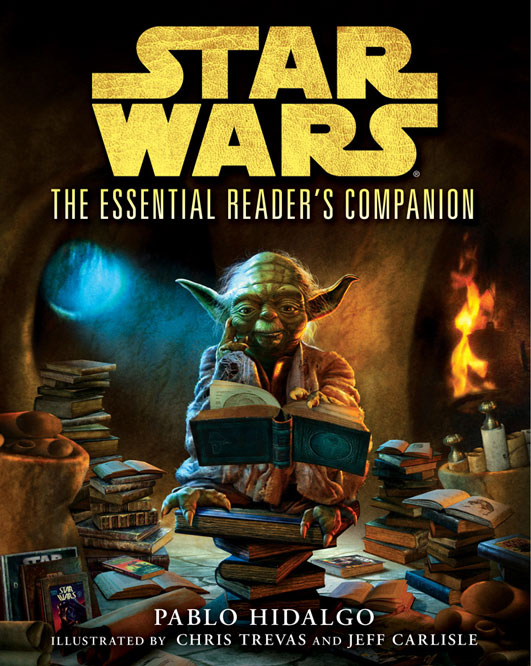
‘Star Wars – The Essential Reader’s Companion’ – Hidalgo, Trevas & Carlisle (Titan Books)

Some books defy analysis because they are so well written that you can’t stop thinking about them in order to come up with any kind of conclusion. At the other end of the scale, other books defy analysis as they are so poorly written as to be unreadable. ‘Star Wars – The Essential Reader’s Companion’ sits firmly in the middle of this chain but I have to say that my feelings towards the book are more negative than positive…

You see, ‘The Essential Reader’s Companion’ may look lovely on the coffee table (some lovely illustrations inside as well) but all it amounts to is a collection of synopses for every Star Wars novel written to date. Well, give or take a few books I guess. What can I say about that…?
Each synopsis is very detailed (a good overview of each story) but that’s about it really and surely any Star Wars fan thinking about picking this up will have a large chunk of the actual books already. That surely punches a large hole in the objective of ‘The Essential Reader’s Companion’ (being a handy reference guide). I personally had a little trouble remembering certain events in Timothy Zahn’s ‘Vision of the Future’ the other day. I could have picked up the ‘Reader’s Companion’ (yay for review copies!) but you know what? I just picked up my copy of the original and found what I needed to know.

That is my big problem with this book, it just feels redundant before it’s even had a chance to sit on the shelves for a few days (it was only released a week ago). It’s not telling us anything that we didn’t know already; it feels like a cynical attempt to fleece fans of a little more of their money. I’m a big reader of the ‘Daily Mash’ and one of their articles described ‘Star Wars’ as ‘the memory of a franchise now consisting largely of insults to its memory’. Books like ‘The Essential Reader’s Companion’ just confirm that for me…

If you have a massive collection of ‘Star Wars’ books (that you’re not going to read) and you’re looking to make some space then ‘The Essential Reader’s Companion’ would be a great way to free up room and keep a vague guide to each book. If you don’t have all the books and want to fill in some of the gaps then I guess this book could do a job there as well. Other than that though, I see no reasons to get yourself a copy of ‘The Essential Reader’s Companion’; not when most of this stuff is online anyway…

Thursday, 25 October 2012

'Sandkings' - George R.R. Martin

“Quiet,” said Wo. “Listen to me. This is your own doing. Keep your Sandkings well, and they are courtly ritual warriors. You turned yours into something else, with starvation and torture. You were their god. You made them what they are. That maw in your cellar is sick, still suffering from the wound that you gave it. It is probably insane. Its behaviour is… unusual. You have to get out of there quickly…”

‘Sandkings’ was one of those stories that I’d heard loads about (I think it was even made into a TV show or something?) but never got round to reading until the ‘Dreamsongs’ collection came out a few years ago. With the US paperback release of ‘Dreamsongs’ (I don’t know what the fascination is with trade paperbacks but that’s another post…) I thought it might be time to revisit this tale and see what I got out of it second time round.

The premise is simple. Simon Kress is an animal collector always looking for new pleasures in what his pets can do to each other,

‘The piranhas could always eat one another if he were detained longer than expected. They’d done it before. It amused him.'

Kress’ latest acquisition (a tank of insectile ‘Sandkings’) offers him new opportunities to visit cruelty on a species that literally worships him as a god. What will happen though when Kress’ actions clearly mark him as a devil…?

‘Sandkings’ is a science fiction/horror crossover that does more to showcase GRRM’s flair for the latter than it does the former. The story takes place on an alien world but we never find out much about it or its technology. Making up for this is a very detailed examination of specific xeno-biology that gives the reader a very thorough grounding for what is to come.

This is a tale of horror, first and foremost, both in Kress’ ability to torture his animal charges (and what this ultimately drives him to) along with just how the Sandkings eventually strike back. Martin ramps up the tension superbly with lots of unspoken warnings and the ‘faces’, in the Sandking castle letting us know that something horrible is looming on the horizon. Martin is very good at this, drawing the reader in and leaving them hanging until just the right moment. Just when you think you can’t hold your breath (metaphorically speaking) any longer, Martin not only hits you with a moment of violent terror but then lets you know that it wasn’t the climax at all. Things are going to get even worse…

‘Sandkings’ operates along these lines up until the end and that is the beauty of this tale. Martin spends so much time convincing you that things are going to get worse that the brief ray of hope that he offers is enough for you to grab it. That’s just what he was after, the ending was always inevitable but that slight change in pace means that you won’t see it coming until it hits you.

The only thing that slightly grated for me was that while Kress is portrayed as very intelligent (almost psychotically so) he does have a nasty habit of getting incredibly drunk at precisely the wrong times. You know, the times when he could just get out and leave the house far behind him. Or call for the one person who could help to come and help him. It felt like Martin had written a character who was far too clever for his own good and needed some way to keep him in the house until what needed to happen happened. A little bit contrived then.

Apart from that, ‘Sandkings’ was a gripping read that I had to finish, even though I’d read it before and knew what happened. GRRM isn’t just an excellent writer of fantasy; he’s a dab hand at the horror as well.


Wednesday, 24 October 2012

'Joe and Me' & 'Thin Men with Yellow Faces' (This is Horror)

Apologies for the break in posting! There has been an awful lot of other stuff going on these past few days; I wish I could say that I've built up a nice little backlog of 'read books' to review but I haven't had time for that either... Things might be like this for a little while, bear with me a little bit while I try and figure out how to fit the blog around a whole load of new things that may (or may not) be happening in the near future. Life eh? :o)

Anyway, I may not have not been able to get much reading done but I was able to polish off a couple of chapbooks from the 'This is Horror' line. I haven't read many chapbooks but there's something instantly appealing about a bite sized read that you don't have to invest a lot of time in but promises a great return. When the authors in question are David Moody ('Joe and Me'), Simon Bestwick and Gary McMahon ('Thin Men with Yellow Faces') then I was up for the read even more; regular readers will know that I have enjoyed their work before.
Chapbooks are, by their nature, very short affairs and I found that this meant that I had to combine the two titles to get a decent sized post. In some respects, it's more of a 'thoughts' post than the kind of review I'd normally write; the length of each chapbook didn't leave me with time for much else than thoughts really. They were both entertaining enough reads although...

It was 'Joe and Me' that left me feeling a little non-plussed when I finished it. On the face of it, Moody gives us a likeable protagonist who will do anything to save his son from... I'm not going to tell you exactly what, suffice it to say that Simon's dilemma is one that the reader can really get behind, what would you sacrifice to save a loved one? When you see what the outcome feeds into though... That's when it didn't quite work for me. The story is written well enough but it fleshes out another story that worked brilliantly precisely because the true reasons for the catastrophe were never really known (only hinted at as a possibility) They are now though and that mystery is no longer a mystery. 'Joe and Me' killed something off, in a story I really enjoyed, and I can't help but feel a little resentful about that...

'Thin Men with Yellow Faces' though, that was more like it. McMahon and Bestwick's tale of evil lurking beneath the streets of a run down council estate makes for compelling reading as their heroine is faced with a choice that will damn her whatever she decides to do. 'Thin Men' also has you asking questions of its villains, creatures who commit unspeakable acts but only do so because they truly believe that not acting would lead to far worse. What is the right thing to do when the life of a child is at stake? Add some utterly grotesque imagery, along with some chilling moonlit chases, and you have a chapbook that takes time to make you think while it's turning your stomach. You can't ask for a lot more than that.

 A bit of a mixed bag then, as a series opener, but there is enough here to suggest that 'This is Horror' are onto something that could be pretty special. I'm looking forward to seeing what they come up with next.

Monday, 15 October 2012

‘The Slithering Shadow’ – Robert E. Howard

So, after having a little moan (yesterday) about how the makers of ‘Conan’ stayed well away from Howard’s original tales, I thought it would be only fair to follow that up with a little look at one of those very tales. You know, in the whole spirit of ‘You see? I was right!’ or ‘Actually, they had a point…’
I’ve already covered a few ‘Conan’ tales here and there, on the blog, so this time round I took the step of, well… opening up one of my collections and pretty much picking a random tale that I’d never read before. The lucky tale turned out to be ‘The Slithering Shadow’, a pulp tale of a seemingly deserted city and the nameless horror that lurks in its depths.

Before I talk about whether ‘The Slithering Shadow’ could be filmed; a few words about the story itself… I really enjoyed the read but it did remind me why I always cherry pick a story at a time here rather than going through the whole collection (I’ve only ever done that once, never again…)
While there is a lot to be said for ‘The Slithering Shadow’, it does run very much along the same lines as a lot of the other ‘Conan’ stories that I’ve read (which isn’t all of them to be fair). Conan and a female companion (usually a different one to the previous story) battle hordes of faceless soldiery and at least one evil monster in a foreboding setting. Conan wins through, although sometimes at great cost, and continues his journey to the next big fight. In the case of ‘The Slithering Shadow’, the formula proves to be a winning one (albeit the same one). The setting is intriguing enough to make you want to step inside the gates of Xuthal and see what waits. Conan facing off against the Xuthal guards makes for some tense reading while the creature Thog may not have a great name but does bring a real sense of cosmic terror to the climax of the plot. There is without a doubt plenty to enjoy here; I’m glad that I picked it up even if it wasn’t necessarily offering anything new. I wonder if Moorcock's 'Dreaming City' of Imrryr was inspired by Xuthal, there's enough there to suggest a link of some sort.

The real question though is whether this short story is ‘filmworthy’ or not. ‘The Slithering Shadow’ is only thirty five pages long so probably wouldn’t make for an entire film (although if they ever did a ‘Conan’ TV show…) but I reckon there is plenty enough here to make for a twenty minute, or even half hour, sequence in a film. Great setting, loads of action and a ‘toad creature from hell’; definitely worthy of a moment in film and I’m still left a little perplexed why moments like this didn’t make the cut. Is there a ‘rights’ issue or something going on? I don’t know…

Saturday, 13 October 2012

‘The Hobbit’ (Illustrated Edition) – J.R.R. Tolkien, Illustrated by David Wenzel & Adapted by Charles Dixon (Ballantine Books)

We all know the story of ‘The Hobbit’ so I’m not going to take up your time with some pointless blurb ;o) If you don’t know the story then there’s a film, looming on the horizon, that will take care of that for you (or you could just read the book…) and that means publishers are scrambling to find anything related that has been previously published and can be wheeled out again. Books like this illustrated edition for example (a book where the cover looks like it has been reworked to look more like the forthcoming film).

This illustrated edition was previously published by Eclipse Books and Del Rey, in the US, while Harper have published it in the UK. This book does come with six new pages of artwork though (don’t ask me which pages they are, I never read the original…) so could be worth your time if you’re looking for a new copy.

As an adaptation, this book works very well for the most part. The main elements of the plot are all covered and, in a move that I particularly appreciated, the poetry is kept to a bare minimum. I used to love reading it when I was a lot younger but, these days, I find that it gets in the way of the actual story so it was a bit of a treat not to have to deal with it. It’s also interesting to be reminded of some of the smaller details in ‘The Hobbit’ and wonder if they will make it onto the big screen. Dixon is very faithful to these details and I was left wondering if the film will show us the mountain giants (throwing rocks) like the book does.

I couldn’t help but wonder though if Dixon was perhaps a little too faithful to the detail. A lot of the panels are crammed full of descriptive passages that the illustrations convey perfectly well by themselves. This leads onto the feeling that the text and illustrations are both fighting to make themselves heard (or seen) instead of working together and getting on with it. You could say that this leads to a more engrossing work where you have to take the time to really uncover the detail. I however felt that this end result was more counterproductive despite there being an awful lot here to get your teeth into.

The illustrations are gorgeous by the way. David Wenzel really captures the look and feel of Middle Earth on paper; it’s not the film that we’re all used to but no less absorbing for all that. I’ll be keeping my copy and can see myself flicking through the pages, every now and then, and just getting lost in how lovely it all looks.

Adaptations are always a little difficult to sum up but ‘The Hobbit’ (Illustrated Edition) does the job that it has set out to do. Perhaps it’s a little too faithful to the original text, a move that doesn’t quite suit this format, but it’s a lovely book to read and I can see it whetting appetites for the film when it arrives.

Eight and a Half out of Ten

Friday, 12 October 2012

‘Ravenor Vs Eisenhorn: Pariah’ – Dan Abnett (Black Library)

If you were about yesterday then you will have seen me going on about how it can kill things, just a little bit, when a tie-in novel makes a big deal about how it’s tying in with a game rather than just concentrating on telling a tale. If you weren’t here yesterday, I’m not going to link to the post in question because that post is right under this one. Go and have a read if you like, I’ll still be here when you get back ;o)
What really bothered me about this approach, in ‘Dark Vengeance’, is that Black Library usually deliberately avoid it in their other books; preferring to actually tell a tale rather than use the book as something else that you should buy with the game. Black Library books usually concentrate on the setting and, for the most part, they do it very well.

It was good then that the other book I’d been reading, at the same time as ‘Dark Vengeance’, was Dan Abnett’s ‘Pariah’. Long term readers here will know that Abnett has serious form for writing top notch novels set in the Warhammer 40K universe. Click Here, Here, Here and Here to see what I mean. I’ve always meant to pick up the ‘Eisenhorn’ books but have been put off by the size of the omnibus edition (not a practical commuter read for me). That, in turn, has led to my never checking out the ‘Ravenor’ omnibus either. ‘Pariah’ though, that’s a different story. At a mere three hundred and seventeen pages long the book sits comfortably in the hand and the blurb suggested something sufficiently ‘stand alone’ that I could get into quickly.

 ‘Pariah’ does make reference to earlier events, something fans should get a lot out of as it continues on from the last two trilogies. However, the adoption of a new point of view character, as the lead, makes this a book that anyone should be able to pick up and get into fairly quickly. It’s the same universe but seen through different eyes and I can see that adding a refreshing twist to familiar surroundings, especially when Abnett gets going with some of the more intricate ‘ins and outs’ of the plot.
But I’m getting ahead of myself a little bit, here’s the blurb…

In the city of Queen Mab, nothing is quite as it seems. Pariah, spy and Inquisitorial agent, Alizebeth Bequin is all of these things and yet none of them. An enigma, even to herself, she is caught between Inquisitors Gregor Eisenhorn and Gideon Ravenor, former allies now enemies who are playing a shadow game against a mysterious and deadly foe. Coveted by the Archenemy, pursued by the Inquisition, Bequin becomes embroiled in a dark plot of which she knows not her role or purpose. Helped by a disparate group of allies, she must unravel the secrets of her life and past if she is to survive a coming battle in which the line between friends and foes is fatally blurred.

The bottom line is that I couldn’t put this one down, despite a little overindulgence (on Abnett’s part) in the descriptive passages surrounding the City of Queen Mab. There really is only so much that you need to know about alleyways before you just want to get on with the plot. Queen Mab isn’t a character by the way; it’s the name of the actual city, that one totally threw me for the first few pages…

‘Pariah’ is a story full of twists and turns; something that really kept me hooked. Just when you think you have a handle on proceedings, Abnett will throw you something right out of left field that sends the plot careening in a brand new direction. There are some huge surprises here that I never saw coming. The beautiful thing is that the plot is such a roller coaster ride (you would not believe what happens to Bequin in the space of just a few days) but comes together to make perfect sense by the very end. Not only does it all make sense but Abnett still finds time to round things off with another big question and the introduction of perhaps the most evil sidekick of all. I can’t wait to read ‘Penitent’ now.

Bequin makes for a most suitable character to see the story through. There is something almost Dickensian about this orphan who is left to fend for herself with the aid of several mysterious benefactors (who always seem to turn up at just the right moment…) The introduction of a strange woman living in a derelict manor hit the mark, in that respect, as well. I did have a little moan, earlier, about the amount of time spent describing Queen Mab but there are some deliciously atmospheric moments that really capture the feeling of just how deadly Bequin’s surroundings can be. I’m thinking about the Basilica Saint Orphaeus and what happens underneath.

The plot isn’t just twists and turns although readers expecting that confrontation between Ravenor and Eisenhorn will be disappointed (it’s the first book in a trilogy, give the plot a chance…) There’s plenty of action to make up for it though with more traitor Marines than you can shake a stick at and at least one Marine who might not be a traitor at all (I don’t know).

‘Pariah’ almost has it all, there is certainly very little not to like about this book and I had a great time reading it. You can count on Dan Abnett not to disappoint and I’m really looking forward to ‘Penitent’ when it is released.

Nine and a Half out of Ten

Thursday, 11 October 2012

‘Dark Vengeance’ – C. Z. Dunn (Black Library)

Anyone following me on Twitter yesterday (what do you mean, you don’t follow me?) would have seen me itching for a book full of big swords and a dragon or two. I was at the Job Centre and it didn’t go that well (although it does serve me right for waiting in completely the wrong room)…
I couldn’t find anything that I was happy to dip into, for an afternoon, until I realised that I just needed to do a little bit of fine tuning :o) Keep the swords but add Space Marines toting big ol’ guns and blowing chunks out of each other… That’s what I was after, something light but incredibly violent.

That’s not to say that all Black Library books are like that. If you read the blog you’ll already know that I think BL books are, on the whole, very well written with an unfair ‘tie-in fiction’ stigma attached. ‘Dark Vengeance’ does fall foul of that stigma though, being written to tie in (see what I did there) with the release of Games Workshop’s ‘Dark Vengeance’ game. It’s also a hardback book that’s only a hundred and twenty pages long and costs £12. It’s a fun read, great way to wind down after the morning I had, but I’m not sure it was that much fun (especially when the ‘Storm of Magic’ novellas were being sold at a third the price, in paperback). Enough of me moaning about money though, here’s the blurb…

The Dark Angels are among the foremost Space Marines, the First Legion of old. Devastated millennia ago by a dreadful schism, the Dark Angels are constantly on the hunt for the mysterious Fallen, former brothers who have turned from the light of the immortal God-Emperor and embraced the dread powers of Chaos.

Newly ordained Company Master Balthasar of the Dark Angels leads his forces to the world of Bane's Landing, the resting place of the ancient and powerful Hellfire Stone, in pursuit of the Chaos Space Marines of the Crimson Slaughter. Kranon the Relentless, the evil lord of the Crimson Slaughter, seeks to use the stone to summon forth his daemonic masters and usher in an age of darkness. As the Dark Angels race to stop him, the scene is set for a mighty conflict between the loyal Balthasar and the traitor Kranon.


A book that is only a hundred and twenty pages long isn’t really going to be about the plot and perhaps it’s unfair to expect that (I wouldn’t have minded a little bit more though). What we have here is a book that sets its stall out early, with a very simple premise and what the stakes are, and then leaves the characters to throw awesome amounts of firepower at each other. If you’re basing a book solely on what can happen in a tabletop war game then you’re not going to get a lot else. It is certainly entertaining though with lots of pyrotechnics and action lighting up proceedings. Dunn can certainly write a combat scene with the best of them and you can almost feel the punches that these superhuman warriors through at each other.

Having said that, Dunn does make the time to (briefly) introduce us to the main players and let us know what they are all about. There are some interesting hints that I wouldn’t mind seeing expanded upon in future novels (like what can drive a Chapter of Loyalist Marines to turn traitor, evil trickery is the answer…) but time constraints mean that these hints remain just that.

Again though, the blurb talks about ‘discovering the characters behind the models’ and ‘the story behind the scenarios’. Maybe Black Library are just being very honest about what this book is but the rest of their books don’t normally feel this detached from the setting. I know you shouldn’t place too much store in a blurb but, this time round, the blurb kind of killed it for me. If I’m reading about something based on a game, I don’t want to be reminded all the time that it’s a game (and structurally, ‘Dark Vengeance’ very reminds us where it came from). I want to get into the story and I couldn’t quite do that here despite how entertaining Dunn makes it.

‘Dark Vengeance’ is a tough one to call then; thoroughly entertaining but perhaps a little too honest for its own good. I like that in a book though, at least you know what you are getting here.

Seven and a Half out of Ten

Monday, 8 October 2012

‘Morning Glories: Volume Three’ - Spencer, Eisma, Esquejo (Image Comics)

Yep, I decided that I really ought to review ‘Morning Glories: Volume Three’ before I take on the ‘Hobbit’ graphic novel. After all, this poor book has been sat on the shelf for a few months now; it’s waited for long enough…

The big question though is why I’ve held out on reviewing this title for so long. Especially when I enjoyed the first two books so much (reviews Here and over Here).
The bottom line is that I really should have re-read those first two volumes before tackling this one.
In its comic book format, I’m guessing that the ‘Morning Glories’ plot must be fairly easy to keep up with if you’re only waiting a few weeks at a time for the next issue. If you’re like me, and waiting for the trades, though… Well, that’s a few months wait, at least, between each book. I was lucky enough to be able to read the first two books really quickly but the wait for the third book (and all the other books that I read in the meantime) meant that I really didn’t have much of a clue what was going on when I picked up Volume Three. That’s my advice to you guys then; if you’ve got your hands on Volume Three then you should really take some time out to read the preceding books before you get going.

I persevered though because, well… ‘Morning Glories’ has proved to be a really intriguing read, posing questions that I really want to see answered. I wasn’t going to let something like ‘a few months between books’ stop me working this one out :o) It took me a while to get my head round this one but here I am, ready to go.

So, we’ve already established that your experience of Volume Three will depend on how recently you’ve read the last two books. Once you get past that you will find that this book is, structurally, very similar to Volume Two. The further you get into the book, the more you find out about the mysterious ‘Morning Glory Academy’, certain of its students and the sinister faculty staff that runs it. The more you find out though, the more questions Spencer poses for you; there is a lot more to both the plot and the Academy… or is there? I’m not sure. Answering a question with another question is a great hook (hey, it got me) but it does raise questions over the shelf life of the series. After all, there’s only so long that you can string out this kind of approach before you run out of meaningful questions to ask.
Funnily enough, I’m more than ok with ‘Morning Glories’ being a story that will eventually end instead of being spun out. I’d much prefer to see a plot that remains true to itself rather than being diluted by the urge to make a few more dollars. We’ll see which way it goes but I’m happy to stick around in the meantime.

I digressed a little bit there, sorry. The latter half of the book really begins to let you know what (or least ‘part of what’) this setting is all about. When you see what is hidden in the grounds of the school, and where it sends Casey, not only will things start to become clear (in terms of certain ‘flashbacks’) but you will find yourself with yet another hook that will have you back for more if you’re anything like me. If you’re still not sure then the cliff-hanger, right at the end, will definitely ensure your return.

There is a lot to get your head around then but there’s no question that it’s all worth the effort. The main cast all get a little more depth and I challenge you not to feel for them as they struggle to survive against the backdrop of a school where strange laboratories are hidden in the woods and ‘sacrifice’ is discussed in dark corridors (all beautifully rendered by Joe Eisma). I’m still in for the long haul, I’ll just make sure that I read the first three volumes before tackling Volume Four.

Nine out of Ten

Saturday, 6 October 2012

‘The Only Good Dalek’ - Justin Richards, Mike Collins (BBC Books)

The Daleks are undergoing a little bit of a renaissance in my house these days, not only because of the latest series of ‘Doctor Who’ but also because Hope has developed a real fascination with science fiction robots. If she’s not running around with her C3P0 and R2D2 toys then she’s yelling ‘Exterminate!’ or ‘Delete!’ at people in the street. Oh well, any excuse to get another piece of Dalek/Doctor Who merchandise into the house… :o)

‘The Only Good Dalek’ is another title that I’ve had my eye on for a while but have only just got round to securing a copy. All good things come to those who wait though, or do they…?
I’ve already reviewed ‘The Dalek Project’ here, I had a few issues with it, and was hoping for better things from ‘The Only Good Dalek’. This graphic novel offered more of the same problems though and I was left wondering if this is a format that BBC Books really want to pursue as it is. This is a real shame considering that the strips from ‘Doctor Who Magazine’ have been collected rather nicely by Panini, IDW are doing some good work here as well).

Blurb copied and pasted as I’m having a bit of a lazy Saturday over here…

Station 7 is where the Earth Forces send all the equipment captured in their unceasing war against the Daleks. It's where Dalek technology is analyzed and examined. It's where the Doctor and Amy have just arrived. But somehow the Daleks have found out about Station 7 - and there's something there that they want back! With the Doctor increasingly worried about the direction the Station's research is taking, the commander of Station 7 knows he has only one possible, desperate defense. Because the last terrible secret of Station 7 is that they don't only store captured Dalek technology - it's also a prison. And the only thing that might stop a Dalek is another Dalek!

‘The Only Good Dalek’ has proved to be a very difficult review to write, as I really wanted to avoid repeating what I’d written for ‘The Dalek Project’. That’s more or less impossible though in terms of the artwork (Mike Collins is doing it again here) so I’m just going to jump right in and quote what I said last time,

‘I’m really half and half on Mike Collins’ artwork which can come across as rushed at times (almost scribbled) which works in terms of showing how urgent the situation is but also just ends up looking, well… rushed really.’

As with ‘The Dalek Project’ though, Collins does throw a few gems out there for us to come across as we read. He’s a dab hand at space battles for a start and he certainly doesn’t shy away from showing us the number of grisly ways that a person can die fighting the Daleks.

The plot itself is, again, very straightforward with a couple of little twists that aren’t all that surprising but do pop up at just the right time i.e. just when it looks like things might be running out of steam. For all the action and excitement though, and there is loads, I couldn’t escape from the feeling that there wasn’t actually an awful lot happening. If I had to sum the book up in one sentence it would be ‘Daleks cannot be trusted and space stations are places where it’s very easy to get lost’. An awful lot of running around happens here, something that I think comes across a lot better on the screen as oppose to a comic. The fact that I can sum the book up in one sentence would rather suggest that there isn’t an awful lot here to get your teeth into.

But it’s the Daleks though! :o) Despite my misgivings about the book, as a whole, it’s still all too easy to get into just how relentlessly evil these aliens are. I found that it was very easy, sometimes, to put my misgivings to one side and just watch the Daleks doing what they do best, Richards’ Daleks exterminate all other life with the best of them.

And before I finish here, I’ve got to say that if ‘The Only Good Dalek’ is canon (and as a BBC book I’m pretty sure that it is) then there is such a thing as a ‘good Dalek’ and the Doctor knows it as well. I don’t know what that was all about in the book… I always swore that I’d stay well clear of canon so I won’t do it again :o)

‘The Only Good Dalek’ is another fun read that doesn’t quite stand up to more determined scrutiny. It’s still worth a look (whether you’re a fan or not) but you should bear that in mind before giving it a go.

Seven and a Half out of Ten

Friday, 5 October 2012

‘Man Plus’ – Frederick Pohl (Gollancz)

This read has been a long time coming and by ‘a long time’ I do mean years. I first saw ‘Man Plus’ when the ‘SF Masterworks’ series originally kicked off (about twelve years ago I think) and the blurb and cover caught my eye even then. I never picked it up though, for a whole number of reasons including 'no money’ and ‘I actually prefer reading Fantasy over Science Fiction, I think I’ll check out the Fantasy Masterworks series instead’.
That pretty much remained the case up until just recently when I found myself reading more ‘SF Masterworks’ (with still more waiting to be read on my shelves) and thought, ‘what was the book that had a picture of a man with bug eyes and wings on the cover?’ Readers of the blog will already know that I found a copy of ‘Man Plus’ in Forbidden Planet and took it away with me for a week in Majorca. The bottom line is that I thought it was superb but I should give you a little more detail than that so here goes…

According to computer predictions, colonisation of Mars is mankind’s only hope of avoiding extinction; the Man Plus Programme is an exercise in biological engineering that will pave the way to humankind being able to live on the Red Planet.
Ill luck made Roger Torroway the test subject for the Man Plus Programme but everything else that was done to him was deliberately designed to give him the best chance of survival on Mars. Underneath that monstrous exterior though, Torroway still carries an all too human capacity for suffering and this could mean the difference between life and death for more than one species… 

To be honest, I had no idea what to expect when I picked up ‘Man Plus’ and started reading. It really was a question of the blurb and cover looked intriguing so I finally decided to act on it and give the book a go. I certainly never expected to be gripped in the way that I was, doing my utmost to make every second of reading time count so I could enjoy the book for that little bit longer. Surprise read of the year? Quite likely. My copy of ‘The Space Merchants’ has just been moved up the pile on the strength of this read.

Out of all the planets you’re ever likely to come across in science fiction, it has always been Mars that has drawn readers in. Whether it’s a fear of alien invasion or the pioneering urge to conquer its surface, the concept of Mars has grown to monstrous proportions and it’s interesting that Pohl has chosen to tackle this concept with a monster of his own. Let’s face it, he didn’t have to. While the science of Torroway’s transformation is plausible enough (both the reasons and the results) I’ll bet he could have come up with a solution that didn’t involve Torroway being transformed to the extent that he is. There is an element of ‘reclaiming Mars’ (or not letting it overawe us) here that softens the hard science and makes things a little more personal. If I’m being completely honest it also makes things that much more accessible for the likes of me.

The actual conquest of Mars is almost a side note to the proceedings although there is the hint of a third party being involved which ends things on a very interesting note. ‘Man Plus’ is more about getting Torroway to Mars and how his humanity is forced into conflict with the changes being made to his external appearance. It all makes for compulsive reading as you can’t help but ask yourself how you would react in the same situation. Once you start doing this you can’t help but root for Torroway to come through each of his trials, especially the ‘tiny little operation’ that almost kills him. It’s interesting to note the forces at play in these moments, one entirely unaware of the other but both working to make sure that Torroway has the best possible chance of success. As a character, Torroway is pretty bland to begin with and Pohl uses this façade to great affect, cracking it open again and again to get those primal responses.

And Torroway really does have a lot to face up to. Not just the countless operations that he has to go through either (all rendered dispassionately, a move which brings home the full impact of these). There is also the fact that his gradual transformation is estranging him from a wife that is already having an affair with the man working on Torroway’s new eyes. The new eyes makes for an interesting side plot in itself (how can Torroway see the truth if someone else has determined what he sees and doesn’t see?) but the President’s intervention, as well as the unseen narrator, goes to show just how important Torroway and his mission are.

‘…do you know what the history books are going to say about me? ‘Fitz-James Deshatine, 1943-2026, forty-second President of the United States. During his administration the human race established its first self-sustaining colony on another planet’. That’s what I’ll get Roger, if I get that much – and you’re the only one who can give it to me.’

‘Man Plus’ is a high stakes tale of science with a human heart beating underneath an exterior that is anything but. It’s a lot more than that though as our ‘unseen narrator’ proves. No matter where Torroway goes it sees his every move and will do whatever it can to help; it is the reason the ‘Man Plus’ Programme was created in the first place and it has its own ulterior motives for lending assistance.
Pohl drops plenty of hints as to the identity of the narrator but they are deliberately lost in what is made of Torroway as his trip to Mars grows ever closer. If you’re like me, you won’t find the revelation to be that much of a surprise but what is really clever is how Pohl keeps it under wraps for an entire book. Great stuff, a ‘story within a story’ that adds to the urgency of the overall plot.

I’m very glad that I finally gave ‘Man Plus’ a go and would say that if you’re thinking about picking it up, don’t wait for as long as I did. I’d definitely say that it is a Masterwork with its superbly executed concept matched up with tight plotting and a lead character whom you will empathise with.

Ten out of Ten

Wednesday, 3 October 2012

‘A Guile of Dragons’ – James Enge (Pyr)

Have you ever come across a book where you know it’s your thing, it’s almost like it has been written just for you, but you can’t get into it. It’s the most infuriating thing when that happens to you and it happens to me all the time with James Enge’s ‘Morlock’ books.
Here’s a series that should be right up my street; an interesting anti-hero making his way across a world that is crying out to be explored by the likes of me. What I found though… Well, you already know what I thought of ‘Blood of Ambrose’ (review Here if you haven’t already read it) and I only got halfway through ‘This Crooked Way’ before putting down, for a quick break, and never finding my way back to it. I haven’t opened ‘The Wolf Age’ at all.

It’s a world that keeps calling to me though so when I heard of ‘A Guile of Dragons’ I knew I’d have to take a look. ‘A Guile of Dragons’ particularly appealed to me with its promise of taking things right back to the start of Morlock’s life and giving us hints at how he ended up the way he did. Maybe it was the sense of jumping on halfway through a story that threw me so badly…

‘A Guile of Dragons’ ended up being a holiday read, last week, and it wasn’t a bad one either. I didn’t find the book to be as good as it wanted to be but there was still plenty to enjoy and I might even be persuaded to give ‘This Crooked Way’ and ‘The Wolf Age’ a go after all.

The dragons have returned from out of the North and and their Longest War, with the dwarves, is set to begin all over again. If that wasn’t bad enough, they are backed by a long dead king and the masked goes of Fate and Chaos.
The dwarves are cut off from any aid and are slowly being whittled away as prisoners are taken and the defenders corrupted by dragonspells. The weight of guarding the North hold, and ultimately the lands of the south, rests on the crooked shoulders of a traitors son…
Even at a relatively young age, Morlock Ambrosius has had a tough life but he has always tried to do the right thing by his homeland and adopted people. What he is about to find out though will force him to make some tough decisions. Regin and Fafnir were brothers and the Longest War can never be over…

As I’ve already mentioned, ‘A Guile of Dragons’ takes things right back to the very beginning of Morlock’s life (a little bit before that even) and delivers on its promise to fill in those blank spaces. Only up to a point however. The book itself is only the opening chapter in a mini-series (a trilogy?), ‘A Tournament of Shadows’ so don’t expect too many answers. In fact, if you go into this expecting a few more questions to be raised then you won’t be disappointed. I wanted to find out a lot more about Merlin and Nimue Viviana and what led them to treat Morlock the way they do in ‘This Crooked Way’. No such luck, I think I’ll be waiting for at least two more books before those answers become clear.
Realistic expectations are the order of the day here then. ‘A Guile of Dragons’ isn’t going to give you all the answers so don’t expect it to. What it will give you though is a story that you can’t help but want to read; even though, at times, it will seem exactly the opposite.

I found ‘A Guile of Dragons’ to be a little more balanced than ‘Blood of Ambrose’ in terms of world building and plot versus character development. A lot happens here and you come away this time with more of a feel for where it’s all taking place. I liked that, this approach certainly made the book feel a little more fleshed out than its predecessor did. And as far as Morlock taking on dragons goes, wow! Enge doesn’t hold back on the pyrotechnics and the thrill of chases through mountain passes and forests. Morlock even kills a dragon and it’s interesting to see how Enge uses this to show how legends can spring from a complete misunderstanding. This certainly casts future events in a whole new light. His confrontation with the dead king of Cor also makes for some gripping reading.

What I found frustrating though was how things seemed to get bogged down by a main character whose pysche is so damaged (and moulded by his time with the taciturn dwarves) that he is incapable of relating to others. There is only so many times that you can be shown this before you find yourself thinking that you know all there is to know, at the moment, and you just want the story to get going. It doesn’t though because the story is all about Morlock, the plot gets trapped by a character who you can’t really get a feel for as he is so protective of his inner self. You could say that Enge wrote the character a little too well here… And given how easily Morlock resolves his feelings, literally in one paragraph at the end of the book, I did feel a little cheated by what I had to go through to get there.
Couple this with the dwarves tentatively getting to know Earno (a Guardian of the South lands) and there were large chunks of the book where I was just waiting for something to happen. It really felt like things were crawling along during these moments.

A tough one to call then. ‘A Guile of Dragons’ has certainly got me interested in the next instalment but, yet again, I’ll be approaching it with some caution and hopes that the story will be allowed to come out from under the shadow of Morlock himself.

Eight out of Ten